October 09, 2026

Posted on: 9/3/2026

Summary:
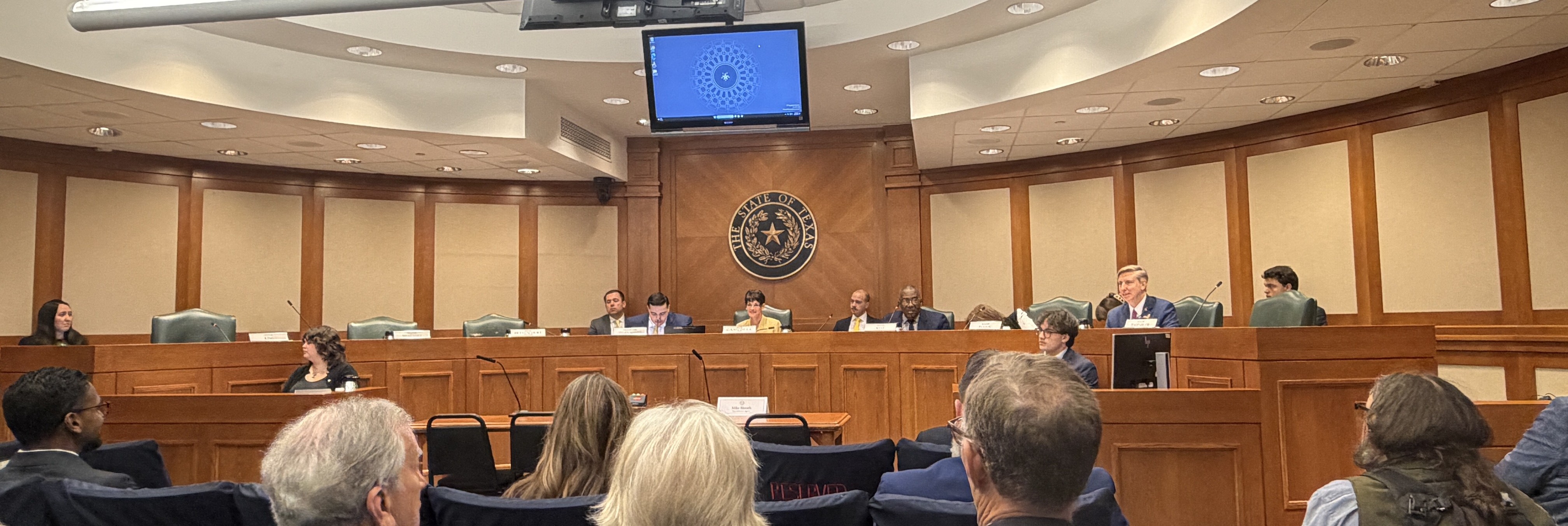
Texas Education Agency (TEA) Commissioner Mike Morath appeared before the State Board of Education (SBOE) Wednesday to discuss the state’s A-F accountability system and answer questions from board members about student performance, teacher compensation, Bluebonnet Learning, and recent school district takeovers by the state.
Morath spent much of his presentation defending the purpose of the A-F accountability system, describing it as “a tool for continuous improvement” and a way to measure whether schools are producing better outcomes for students. He highlighted an increase in A-rated campuses and a decrease in D- and F-rated campuses and specifically pointed to high-poverty campuses that earned high ratings as evidence that poverty does not have to determine student outcomes.
Morath also discussed changes to the college, career, and military readiness (CCMR) component of the accountability system. He acknowledged that some measures, including college-preparatory courses provided to students under partnerships between school districts and local community colleges, have not always accurately reflected whether Texas students were prepared for college. TEA found that most students who passed the college-prep courses still failed their first year of college, prompting the agency to change how the measure will be calculated in future accountability ratings. Beginning in 2028, the state has added additional requirements for these courses, including a requirement for evidence-based instruction in those courses.
He also touted the Teacher Incentive Allotment (TIA), noting that approximately 65,000 teachers have earned designations and saying he expects school systems to eventually receive nearly $2 billion annually through the program. He did not mention anything about the possibility of National Board Certified Teachers losing their designation under TIA, a topic under review by the State Board for Educator Certification (SBEC). The final decision from SBEC is expected in December, and the decision could jeopardize the TIA designations of approximately 900 teachers.
The emphasis on accountability in Morath’s presentation was particularly notable in light of a recently published TEA audit. (Learn more about the audit in this Teach the Vote blog post.)
Board member Tiffany Clark (D–DeSoto) specifically questioned Morath on this, asking about the “lack of oversight” shown in the results of the TEA audit.
Morath rejected that characterization forcefully, emphasizing that the audit reviewed $40 billion in TEA expenditures and found no unallowed funds.
“I think it is a sort of egregiously inaccurate characterization to describe that audit as surfacing a lack of oversight,” Morath said. He added that it was “quite possibly the cleanest audit any state agency has ever had in the history of the state.”
Morath acknowledged the audit did identify concerns involving personnel and management. But rather than address those concerns in detail, he pointed to TEA’s staffing and spending levels, claiming the agency’s salary growth rate is less than half that of most other state agencies and calling TEA “quite possibly the leanest state agency that exists in the state of Texas.” This is a bold claim: The agency’s employee headcount has grown between 50%–60% during Morath’s tenure, with a large percentage of that growth in higher salary managerial positions. Conversely, ISD employment statewide has grown less than 10%, with educational aides—some of the lowest paid educational staff—by far the fastest-growing segment.
Morath’s vehement defense of his agency does not align with his own push for accountability at the district level. Throughout his presentation, Morath emphasized that school districts and campuses should be judged by their outcomes and that poor performance cannot simply be explained away by circumstances. Yet, when faced with questions about management issues identified in the TEA audit, Morath focused on fiscal management of the agency. Morath himself acknowledged the issue identified in the audit with regard to top-heavy staffing and management practices—but he does not seem to think TEA should be subject to the same scrutiny and accountability demands he is placing on school districts. Time will tell if the Legislature will act in response to the audit results.
Clark also asked about student outcomes in districts using Bluebonnet Learning materials. Morath said TEA had identified 72 A-rated districts using Bluebonnet, 26 of which had not received an A rating the previous year. TEA’s analysis, he said, found that Bluebonnet districts had better year-over-year changes than non-Bluebonnet districts across all grades and subjects, but he also stated that this didn’t “mean that [Bluebonnet is] perfect” or that [TEA hasn’t] seen challenges with regard to implementation.”
Morath said TEA would continue to examine needed changes to implementation practices and use that information to make curriculum changes.
Board members also raised concerns about districts not receiving printed Bluebonnet materials on time. Member Will Hickman (R–Houston) told Morath a local district was having difficulty obtaining materials because the Region 4 Education Service Center print shop was backed up and asked whether districts could use local printers instead. Morath said districts can download and print the materials themselves but also acknowledged that the $20 reimbursement for printing is subject to statutory and rule requirements. He acknowledged the state needs to do better about providing districts with more options.
Member Brandon Hall (R–Weatherford) asked Morath for a status update on the TEA takeovers of Fort Worth and Lake Worth ISDs, noting that he believed the newly appointed superintendents in those districts had made decisive changes since taking power. Morath said it is too early to judge their effectiveness because the takeovers have been in place for less than a year and that TEA would evaluate progress against its list of exit criteria at the end of each school year. Specifically, he said TEA is looking for substantive changes in how the central offices support their campuses, including stronger teacher recruitment, training, and support systems; removing non-teaching responsibilities from teachers; and ensuring students receive grade-level instruction and needed interventions. Hall asked about evidence from Houston ISD, which has been under a state takeover since 2023. Morath pointed to what he said were significant gains in student proficiency and reductions in achievement gaps in Houston, saying TEA hopes to see similar improvements in Fort Worth and Lake Worth.
Morath also addressed the possibility of additional district takeovers, including in Austin ISD, noting that it is too early to know how many districts could ultimately face state intervention based on this year’s accountability ratings. Morath emphasized the current results are preliminary and subject to appeal from districts and that TEA still has decisions to make before takeovers occur.