October 02, 2026

Posted on: 10/9/2026 | By Tricia Cave
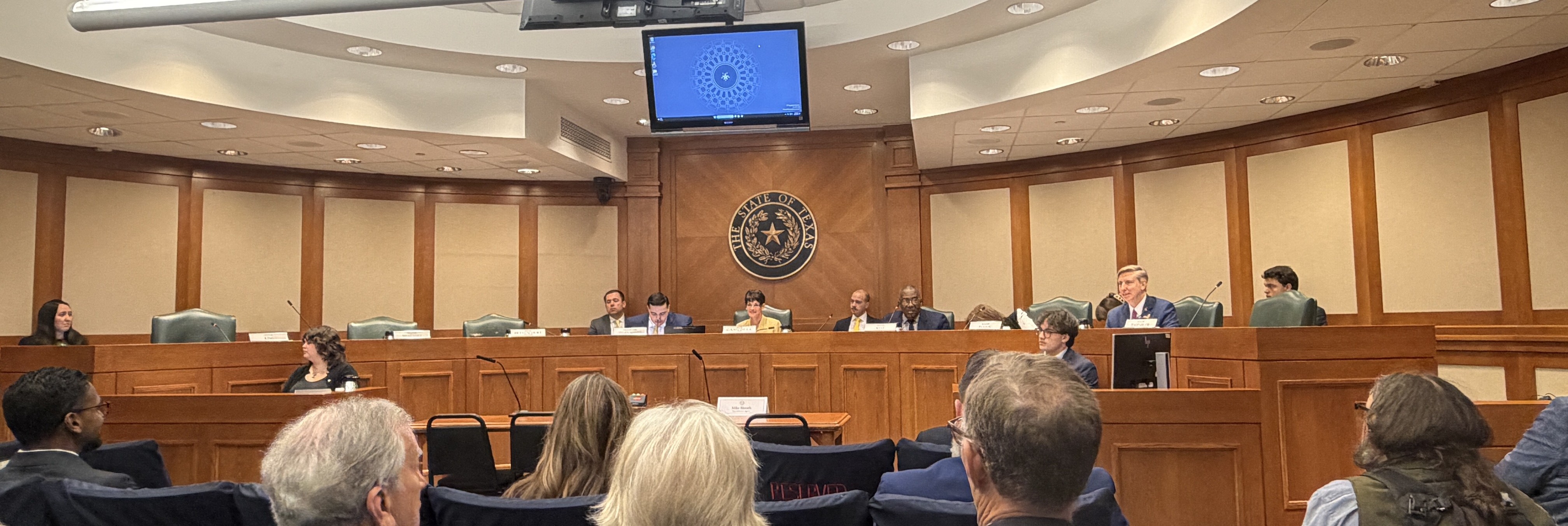
The Senate Committee on Education met Oct. 6 for the first of two days of interim hearings on its interim charges from Lt. Gov. Dan Patrick (R). The charges, which Patrick announced last spring, included examining enrollment trends, instructional time, educator compensation, school finance, educator misconduct reporting, and implementation of several pieces of legislation from the 89th legislature. The committee has a new chair, Sen. Donna Campbell (R–New Braunfels) following the resignation last year of former chair Brandon Creighton (R–Conroe) who is now Chancellor of the Texas Tech University System.
TEA discussed the need to develop new superintendents, noting that Texas districts hire about 170 each year and that many are first-time superintendents. Districts are currently experiencing a decline in educators wanting to move into leadership roles. There are several factors causing this shift, including legislation passed in recent sessions that failed to increase administrator pay, added civil and criminal penalties for failure to report misconduct, and took away the ability of administrators to work second jobs in education-related companies that may contract with their school districts. Chair Campbell pointed to annual superintendent turnover of nearly 14% as a reason to strengthen leadership development and support in Texas.
TEA presented its Texas Strategic Leadership program to the committee, touting the program as a way to help districts build leadership capacity and improve student outcomes. Waller ISD superintendent Bennie Mayes, who piloted the program, said it helped his district move away from simply adding new initiatives and identify actions that were most likely to improve student outcomes. Leander ISD Area Superintendent Dr. Terri Osborne said that the program helped her district to focus on growth at every level of leadership, rather than just the top. This includes developing assistant principals and principals who will hopefully move up into those higher leadership roles in the future.
TEA Commissioner Mike Morath provided an overview of the state of public education, including the continued decline in enrollment. Statewide enrollment has fallen by about 76,000 students over the past few years, creating challenges for districts under a school finance system that is heavily tied to student counts and attendance.
ATPE Governmental Relations Director Monty Exter pointed lawmakers toward an opportunity created by the decline in enrollment in his testimony Tuesday. He noted that the state historically spent significant amounts of money each biennium to accommodate enrollment growth, often without increasing per-student funding. With enrollment now declining, the state has both previously appropriated funds that were not allocated because enrollment came in lower than expected and funding that is no longer needed to cover enrollment growth. Exter suggested sweeping those unused funds back into the school finance system. Combined with new funding, that could create an opportunity for meaningful increases in per-student funding that districts could use for smaller class sizes, educator professional development and retention, and higher quality programs—investments that are more difficult to make when new funding must first keep pace with enrollment growth.
The committee also discussed whether the state should move toward enrollment-based funding rather than relying so heavily on average daily attendance (ADA). Sen. Jose Menendez (D–San Antonio) questioned whether funding districts based on enrollment would give them greater stability when planning contracts, staffing, and other expenses. Dr. Devin Padavil, superintendent of Georgetown ISD, told Menendez that enrollment-based funding would help, noting that districts have significant fixed costs that do not disappear when a student is absent.
Menendez later pressed the issue with the committee, suggesting the state should consider funding a larger share of school costs based on enrollment so districts have more predictable funding for expenses such as transportation and insurance. Chair Campbell noted that moving entirely to enrollment-based funding could cost the state an estimated $2 billion more per year, prompting discussion of a possible hybrid approach rather than an all-or-nothing change. Sen. Royce West (D–Dallas) also urged the committee to take a hard look at the issue, particularly as districts face greater uncertainty from declining enrollment and the implementation of vouchers.
Instructional time, and in particular the proliferation of four-day school weeks, was another major focus of the first day. Commissioner Morath told senators that the average Texas school now operates about 169 instructional days, down from roughly 180, and that about 15% of campuses now operate fewer than 165 days. Texas law currently requires districts to operate a minimum of 75,600 minutes per school year rather than a set amount of instructional days, giving calendar flexibility to local school districts. Morath also cited state data showing lower reading and math proficiency associated with four-day schedules and said the schedules have not produced a long-term teacher retention benefit.
Districts leaders using four-day schedules pushed back on the idea that the calendar causes a loss of instructional time. The Superintendent of LifeSchool charter schools, Dr. Brent Wilson, said they added 30-60 minutes to each school day, exceeded the state’s 75,600-minute instructional requirement, and saw teacher retention increase from 65% to 77%. Woodson ISD superintendent Casey Adams similarly told senators that his rural district’s calendar exceeds the state requirement by more than 2,200 minutes and that they use Fridays for extracurricular activities, travel, and dual-credit opportunities. Both programs argued that the additional flexibility has helped them recruit and retain educators in communities where staffing can be difficult.
Lawmakers invested $8.5 million in House Bill (HB) 2 by Chairman Brad Buckley (R–Salado) last session for Texas public schools, and the committee seemed frustrated that despite that investment, districts continue to face budget shortfalls and difficult decisions about staffing and campus operations. Chair Campbell pushed back on suggestions that the state had not done enough while acknowledging that the funding has not solved every problem facing public schools.
The committee also discussed changes made to the Teacher Incentive Allotment through HB 2. TEA expects approximately 1,000 of the state’s 1,200 districts to participate in TIA this school year. Of the remaining 200, the agency said many included charter schools whose compensation models may not align with the program. Staff also presented on the enhanced TIA model created through HB 2. Enhanced TIA is a new model that requires districts to adopt a districtwide performance-based strategic compensation system. To qualify, districts must make all teacher types eligible for TIA designations, replace traditional step-based salary schedules with performance-based compensation, develop new evaluation systems for principals and assistant principals that make them eligible for TIA, and use a TEA-approved strategic staffing plan. ATPE has repeatedly expressed concerns about requiring districts to abandon annual step increases and move toward a compensation system based strictly on student performance rather than educator experience.
The committee also received an update on special education funding. HB 2 moved special education to a new funding model based on the intensity of services that students receive. TEA said the current school year is a transition year, with districts reporting under both the previous system and the new service intensity model. The new system will become the sole funding model in 2027-28. TEA said it is too early to determine the full impact of the new model because the state is still collecting the data needed to establish the final funding weights and service group amounts. In our written testimony, ATPE also urged caution in evaluating the success of this model, noting that implementation will take time and hasty judgments about its success should not be made.
The committee also discussed the increase in special education evaluations, including for students participating in the state’s voucher program who do not attend public schools. While HB 2 provided additional funding for these evaluations, it does not come close to covering the full cost, nor does it help with limited staffing, creating undue burden on school districts for students not even enrolled. ATPE recommended in our written testimony that the state provide outside evaluators to conduct evaluations for voucher students rather than requiring districts to absorb the workload and cost.
In her testimony, ATPE lobbyist Tricia Cave thanked lawmakers for the Teacher Retention Allotment while raising concerns about the additional costs incurred by districts due to the salary increases. Higher salaries create additional district expenses for TRS contributions and payroll taxes. These costs are estimated at about $400 per teacher, and ATPE is asking the legislature to cover those costs to the districts when setting funding levels next session.
Cave also raised concerns about access to TIA. Some districts have limited eligibility or slowed expansion of their TIA programs because they are concerned about the long-term costs of maintaining designated teachers’ salaries. Cave urged lawmakers to ensure that all teachers, no matter what grade level or subject they teach, have a meaningful pathway to additional compensation and to preserve National Board Certification as a route to TIA designation. That option is currently under review by the State Board for Educator Certification and will likely be revoked in December unless the National Board makes extensive and unnecessary rewrites it says it does not have the staffing or resources to undertake.
The committee heard from TEA Inspector General Levi Fuller concerning the implementation of SB 571 by Sen. Paul Bettencourt (R–Houston). Fuller gave a presentation outlining efforts taken by TEA’s investigative division to implement the law, including rewrites of the educator code of ethics, new procedures for temporary suspension of educator certificates, the implementation of a do-not-hire registry, and the development of an educator misconduct dashboard on the TEA website. Fuller acknowledged a backlog of cases as reporting has spiked due to requirements under the law, but claimed this was a temporary backlog and that additional staffing would help to correct it.
ATPE Governmental Relations Director Monty Exter pushed back on this in his testimony, questioning whether the volume of reports could be dismissed as simply a temporary backlog. Because districts are required to report within 48 hours, he said, this would continue to create a consistently high number of reports that would require permanent investment in resources, including staffing, to investigate and resolve cases promptly.
Exter also raised concerns about the reporting requirement itself. Under the law, superintendents have no discretion to withhold a report, even when a local investigation finds no credible evidence misconduct has occurred. They must forward any and all reports made about an educator to TEA for further investigation within 48 hours. While ATPE supports removing educators who have committed misconduct, due process rights for educators must also be protected. The current system’s backlog leaves educators in limbo for months on end, with a flag on their certificate, often leading to a situation where they cannot teach in their current district where the conduct was flagged but also cannot find another job in education. Exter encouraged the state to provide adequate resources to resolve cases quickly and procedures that do not subject educators to unnecessarily prolonged investigations.